Autism vs ADHD vs Anxiety in Kids
Autism, ADHD, and anxiety can look identical in kids. Good Day Mental Health's psychologists explain how testing tells them apart, and why the answer changes what comes next.
A second-grader hides in the bathroom during group work. His teacher says he seems anxious.
A fifth-grader interrupts constantly, then falls apart when corrected. Her pediatrician says she seems anxious.
A seventh-grader has stopped turning in homework and snaps at everyone at home. His parents say he seems anxious.
All three children were described the same way. All three left a psychological evaluation with different answers.
"Anxious" has become the catch-all explanation for almost any struggle a child has at school or at home. That makes a certain sense. Anxiety is common, families talk about it openly now, and it really does show up in children at high rates. The catch is that autism, ADHD, and anxiety look nearly identical from the outside. A child who won't join the conversation, can't sit through dinner, or unravels over small changes could be experiencing any of the three, or two of them, or all three at once.
Getting this right changes what happens next, because support built for one condition can be actively wrong for another. Here's how the licensed clinical psychologists who do this work every week actually tell them apart.
What anxiety looks like when a child has it
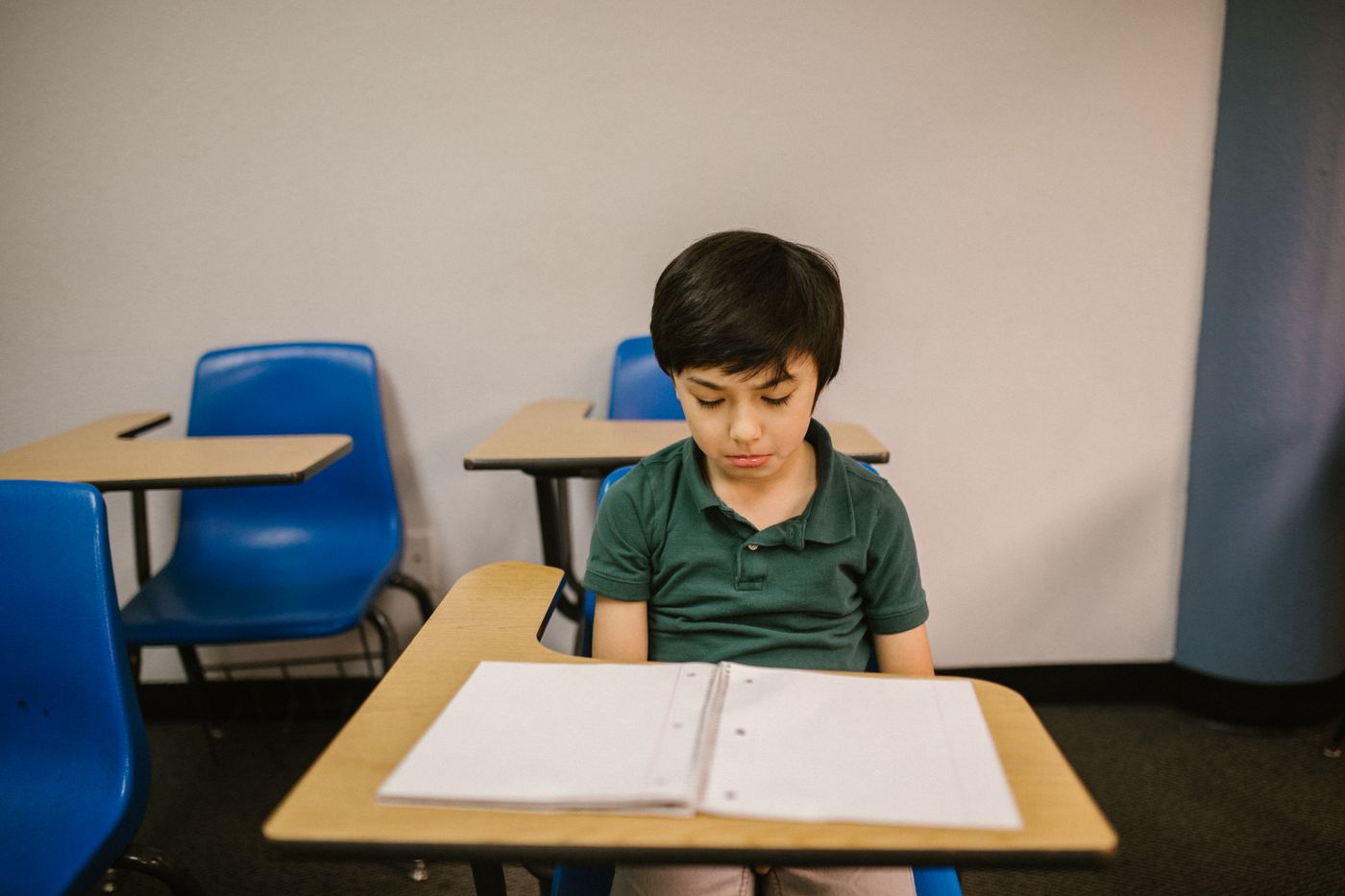
Childhood anxiety almost never announces itself the way the adult version does. A seven-year-old rarely says "I'm worried people will judge me." Dr. Clarissa Gosney, PsyD, a licensed clinical psychologist who specializes in childhood anxiety, describes what she sees instead: a child who can't advocate for their own needs, and who struggles to communicate what's wrong either verbally or nonverbally.
"It often looks like tummy troubles or tantrums."
Dr. Clarissa Gosney, PsyD, Good Day Mental HealthStomachaches with no medical explanation. Meltdowns that seem to arrive from nowhere. A slow retreat from activities the child used to love. In older kids, and especially in boys and teenagers, anxiety often shows up as anger instead.
"While moodiness is a common symptom with hormonal shifts during puberty, it can also be a sign of anxiety or depression. People with ADHD, whether children, teens, or adults, can seem to snap at what others may view as a minor annoyance."
Dr. Clarissa Gosney, PsyDPuberty, anxiety, depression, and ADHD all produce the same irritable thirteen-year-old. ADHD involves differences in the prefrontal cortex, which governs planning, impulse control, and emotional regulation, so an ordinary annoyance landing on an overstimulated nervous system can look like a purely behavioral problem. Four plausible explanations, four different responses, which is why Dr. Clarissa Gosney recommends a thorough psychological evaluation over family guesswork.
Same behavior, three different stories
The overlap between these conditions is real, but what drives the behavior underneath is not the same. Dr. Joanna Kennedy, PsyD, of Pinnacle Counseling and Testing Center in Escondido, California, spends much of her week on this kind of differentiation, including autism evaluations using the ADOS. The diagnostic question in her work is rarely what a child is doing. It's why.
Same empty seat at the lunch table, three different stories behind it. What Dr. Kennedy watches for during testing is more granular than most parents expect.

"They might be anxious, they might not want to look at me, they might not have much to say. But I'm really looking at how they're having a back-and-forth conversation, how they're responding to little things like dropping a pen. The quality of the social interaction."
Dr. Joanna Kennedy, PsyD, Pinnacle Counseling and Testing CenterWhether a child glances at the dropped pen, comments on it, or never registers it at all carries diagnostic weight. When she's weighing ADHD, she's tracking something else: a child who keeps missing what she just said, or who offers comments belonging to a different conversation. Those patterns point toward an attentional difficulty rather than a kid who's simply nervous in an unfamiliar room.
When an attention problem isn't ADHD
Dallin Hendry, MEd, a doctoral student in school psychology at Utah State University, practicing under the supervision of Dr. Clarissa Gosney, PsyD, works in the setting where these misreads happen most.
"ADHD can be a misleading name. It's not so much a lack of attention as a lack of attention regulation. The attention is usually shifted onto something else."
Dallin Hendry, MEdA child with ADHD isn't attending to nothing. They're attending to the wrong thing at the wrong moment, without much say in it. Anxiety produces inattention by a different route entirely: overwhelm, plus an internal monologue running lines like "people are going to laugh at me" or "I'm going to fail this." From a teacher's desk both look the same, which is why assessment includes asking children directly what's happening internally, alongside questionnaires and structured observation.
"Sometimes what looked like a child refusing to work was actually a case of fight or flight, where they felt too overwhelmed and anxious to even begin. When we gave some coping strategies and accommodations, the attention concerns fixed themselves."
Dallin Hendry, MEdNo stimulant medication, no ADHD diagnosis, just a nervous system that needed a different kind of help. He flags report cards as the classic trap: a falling grade gets blamed on attention when the actual obstacle may be an undetected learning disorder or anxiety taxing a child's capacity to focus and learn.
The diagnosis that arrives first isn't always the deepest one
These conditions don't take turns. They co-occur often, and the label a child receives first tends to be whichever one is loudest rather than whichever one runs deepest.
"Most often I'd say I see ADHD diagnosed first, and that masking, covering up autism."
Dr. Joanna Kennedy, PsyDHyperactivity gets flagged in kindergarten. The quieter differences in how that same child connects socially may wait years for a close look. Dr. Kennedy sees the mirror image too: an autistic child identified early whose ADHD becomes apparent with age, ending up accurately carrying both. Dr. Clarissa Gosney points to signs that anxiety may be secondary rather than primary, including reduced social reciprocity, restricted or repetitive behaviors, echolalia (repeating or parroting speech), fidgeting and lost concentration even during calm stretches, and strong sensitivity in any of the senses. When worry arrives in that company, a licensed clinical psychologist widens the lens rather than closing the file.
Why the order of treatment matters
Treatment for anxiety looks different from support for autism, which looks different again from intervention for ADHD. When a child carries more than one, sequence becomes strategy. Dr. Clarissa Gosney offers a concrete case: when a child's anxiety grows downstream of ADHD, rooted in the sting of regretting things blurted impulsively, the ADHD gets treated first. Treat only the worry and the impulsivity keeps generating fresh material for it.
Testing is how a testing psychologist earns confidence in that kind of call. It isn't a single checklist. It's diagnostic criteria weighed against behavior observed directly in the room and reported by the people who see the child everywhere else, parents and teachers both, sorting what's unique to each diagnosis from what's shared. A teacher or pediatrician, however skilled, isn't positioned to pull those threads apart inside a classroom or a fifteen-minute visit, particularly when the presentation is subtle.
For the parent reading this

You may have recognized your own child in two or three places above. Untangling this from home isn't something you're expected to manage. What helps is noticing patterns, writing down what you see and when it happens, and bringing that record to a licensed clinical psychologist who does the untangling professionally.
If the word "diagnosis" is the part giving you pause, Dr. Kennedy has sat with hundreds of families at exactly that hesitation.
"At the end of the day, the goal of that diagnosis is to help us understand the child so that we can work on things they can do differently, but more importantly, so everyone around them understands them better."
Dr. Joanna Kennedy, PsyD, Pinnacle Counseling and Testing CenterQuestions parents ask us
Can my child really have more than one of these at once?
Yes, and it's common. ADHD and anxiety frequently occur together, and autism and ADHD co-occur often enough that finding one prompts a licensed clinical psychologist to look carefully for the other. A thorough evaluation keeps asking questions after the first diagnosis that fits.
At what age can testing actually tell these apart?
Earlier than most parents expect. Autism assessment is meaningful by preschool age, and ADHD and anxiety can be evaluated reliably in the early elementary years, with tools matched to the child's age and development. If you're seeing patterns that worry you, it's rarely too early to ask.
Will a diagnosis follow my child around or limit them?
A diagnosis is a description, not a destiny. In practice it opens doors more often than it closes them: school accommodations, targeted therapy, and adults who start responding to what's actually happening rather than what it looks like. Many families describe the evaluation as the moment things began making sense.
What should we tell our child before an evaluation?
Keep it simple and honest. This is a chance to figure out how their brain works best, with someone who spends their days doing puzzles and activities with kids. No needles, no passing or failing, nothing they can get wrong. Most children leave having had a decent time.
Wondering which story fits your child?
Our licensed clinical psychologists provide comprehensive psychological testing for children and teens across Northern Utah, in person in Ogden and via telehealth statewide.
Schedule an Evaluation