
Veteran mental health in Northern Utah: what changes after service, and what helps
Discipline isn't what goes missing when you get out. The structure it was attached to is, and that's a very different problem to solve.
What would it take to get back to operating at the level you know you're capable of?
Most veterans are highly trained and highly disciplined, not broken people looking to be repaired. What changes after service is that the structure disappears. The schedule, the standards, the people who noticed the second you slipped, all of it goes at once, and some of what made you effective goes with it. Add the habit of expecting the worst, which the job required of you, and things at home get harder than they need to be. Good counseling can help you do better.
Plenty of people reading this aren't veterans. They're spouses, parents, and adult kids who noticed something before the veteran did, and who are trying to figure out whether to say anything. This is written for both of you, because the picture is easier to see from the outside and easier to change from the inside.
Good Day Mental Health provides psychiatric care, therapy, and psychological testing to veterans in Ogden and throughout Utah by telehealth. This post covers where things tend to slip after service, how you can tell, and what makes the biggest difference the fastest.
What this covers
You didn't lose discipline, you lost the structure
The military is the most organized environment most people will ever live in. Wake time (Reveille!), PT, chow, formation, the job, and people who noticed immediately if you slipped. You didn't have to build any of it. It was already there, and you worked inside it.
After separation from service, all of that goes away at once. The discipline is still there. What it was attached to isn't. A lot of veterans read what follows as a personal failure, and a lot of families read it as someone changing for the worse, when what actually happened is that the structure came out from under a person and nothing was offered to replace it.
Putting that structure back on purpose is the fastest thing that works, because the discipline latches onto it almost immediately. A set wake time. Training on a schedule instead of when you feel like it. Work blocks with a start and a finish. A short list of things you do daily whether you want to or not, because doing things whether you want to or not is what you were trained for. Veterans usually turn this around faster than civilians, because the discipline was never what went missing.
Bryce Gosney, PMHNP-BC, a board-certified psychiatric nurse practitioner and a Marine Corps veteran of nine years with combat tours in Iraq and Afghanistan, puts the whole thing in terms of preparation.
"Fear and anxiety are not a sign of weakness. They're a signal from your brain that you lack preparation, and the way to cure fear and anxiety is to prepare more."
Bryce Gosney, PMHNP-BC
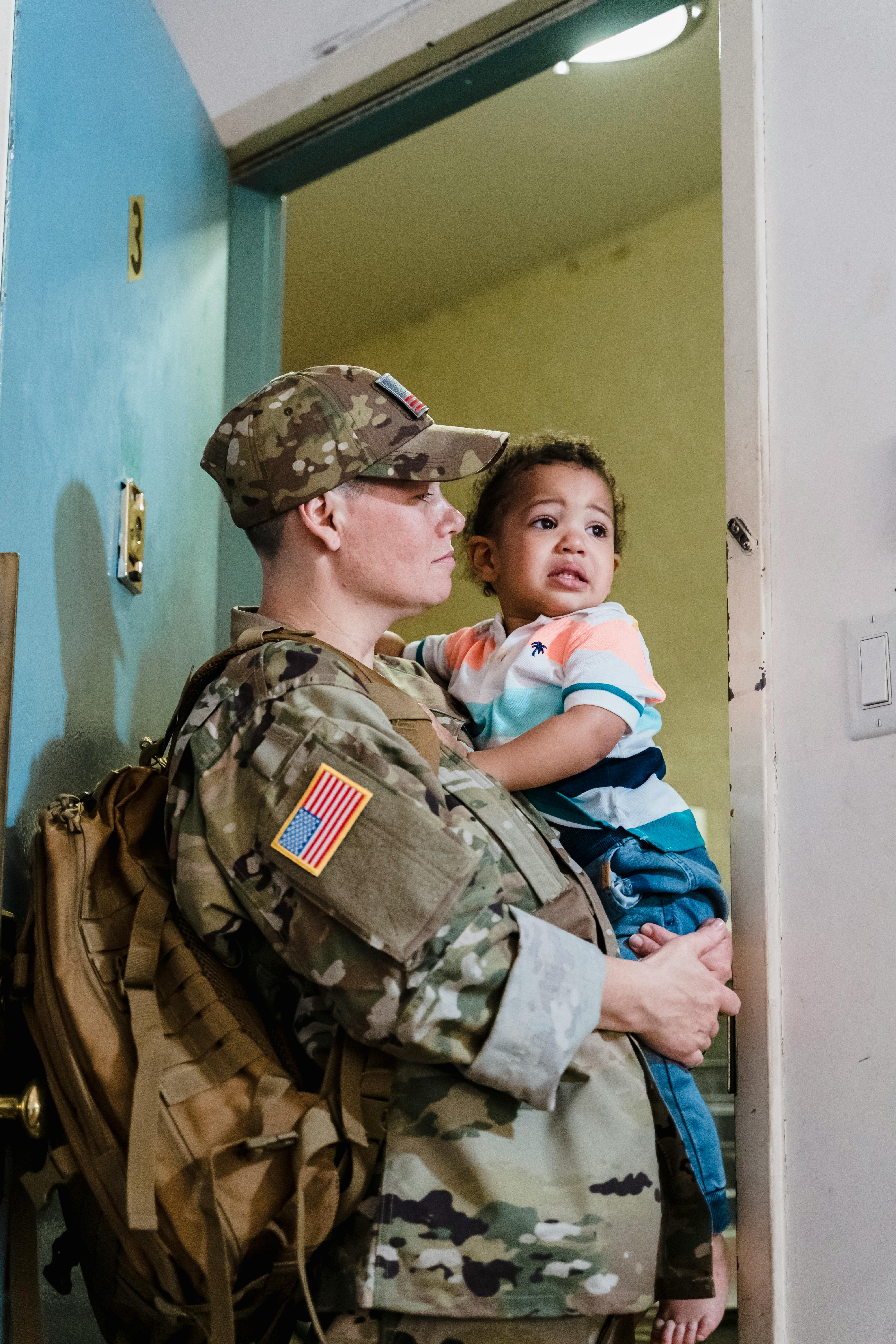
The mindset that kept everyone alive
Nobody pays a service member to assume things will turn out fine. You're paid to assume the opposite, to run the worst case first, to spot the threat before it develops, and to build the contingency nobody else thought was necessary. That's not a defect. That's the job, and it's why people came home.
It doesn't switch off at separation, and it wasn't designed to. Dr. Clarissa Gosney, PsyD, describes it as a permanent change rather than a phase you pass through.
"Even after separation from service, service members may still scan a room for potential threats and assume that anybody could be a danger. Their brain is trained to always be on the ready."
Dr. Clarissa Gosney, PsyD, Licensed Psychologist
The cost shows up when that habit gets used somewhere it doesn't belong. On the job it keeps people alive. In a marriage, every disagreement starts to look like the first sign of something worse. With teenagers, ordinary behavior looks like a problem developing. Applied to your own plans, you prepare so thoroughly for things going wrong that you never commit to anything.
The work isn't softening anyone. It's using that habit where it earns its keep and setting it aside where it doesn't, which is a question of when rather than a question of who someone is.
What families and veterans notice first
Asking a veteran how they're doing rarely gets anywhere useful, and it isn't denial. Years around people running at very high stress moves your sense of what counts as fine a long way up. Measured against that, almost nothing seems worth bringing up.
The things worth paying attention to are the ones other people can see. Three come up most often, from veterans and from the families sitting next to them:
The household starts working around one person's mood. Someone checks the temperature of the room before raising a subject. The kids get quieter when a parent comes in. Families usually notice this long before the veteran does, and noticing it doesn't make anyone the villain of the story.
Small things get big reactions. A dish in the sink, a slow driver, a question asked twice. The response doesn't match what caused it, and the veteran generally knows that in the moment and it happens anyway. SSGT Bryce Gosney offers his own: irrational anger about how his children laced their shoes. "Left over right, how hard can it be!"
Hours disappear into things nobody chose to spend them on. Scrolling, drinking, gaming, a screen running in the background all evening. Not because any of it is satisfying, but because sitting with nothing running got harder than it used to be.
On the anger signal specifically, Bryce Gosney treats it as information rather than as the problem itself.
"Anger is a secondary emotion. We're using it to cover up feeling hurt, or scared, or ignored, or powerless. And unfortunately, that anger usually comes out toward the people we love the most."
Bryce Gosney, PMHNP-BC
The anger is rarely about the dish or the driver. What's underneath it is what has to be addressed.
Timing confuses families more than anything else here. Dr. Clarissa Gosney notes that under long stretches of stress, people usually keep functioning fine, because staying ready is what the job demands. Things tend to become noticeable as separation approaches, or in the months and sometimes the year or more afterward, once there's finally room to notice them. If a veteran in your life seemed fine for years and then didn't, nothing new went wrong. That was the first chance anyone had to look at it.
Start with sleep
Ask Bryce Gosney where to start and the answer is almost always sleep. Stage three and stage four deep sleep is when your brain repairs itself and rebuilds your capacity to handle stress, so focus, reaction time, patience, and physical recovery all run on whatever sleep you actually got.
Military service trains people to run on reduced sleep and treat that as normal, and the habit follows most people home long after the reason for it expired. In a prospective study of US Army soldiers, pre-deployment insomnia contributed to the prediction of post-deployment PTSD, so sleep is not only a sign of how things are going. It shapes what comes next.
Structure does most of the work here too: a set wake time, the same wind-down nightly, and treating light and caffeine as things you control. Where medication makes sense, Bryce Gosney will often consider options such as clonidine or guanfacine, which support sleep architecture while the brain does its own repair. He's direct about what he avoids: zolpidem carries meaningful risk of dependence, sleepwalking, and rebound insomnia, which makes it a poor choice for someone who needs a result that lasts. Any of that is a conversation with a prescriber who knows your history, not a plan to build alone.
Get checked out properly
Problems get blamed on the wrong thing constantly, in both directions. Physical causes get written off as mental health, and mental health causes get written off as "that's just what service does to you."
Amy Jones, MSN, APRN, FNP-C, a family nurse practitioner in Ogden with extensive experience treating veterans, sees one pattern more than any other.
"One of the biggest things I see is veterans normalizing symptoms because they have lived with them for so long."
Amy Jones, MSN, APRN, FNP-C
Her list is unglamorous and long: chronic pain, poor sleep, fatigue, headaches, irritability, digestive issues, weight changes, reduced libido, trouble concentrating. Any one reads as the ordinary price of service. Together they often add up to something treatable that nobody has looked at all at once. She's equally firm in the other direction, cautioning against automatically filing everything under PTSD, aging, or military service, since that assumption closes the workup before it opens.
Her sleep questions are specific enough to use at your next appointment, because "are you sleeping okay" catches nothing. Do you snore? Has anyone witnessed you stop breathing? Nightmares, or waking repeatedly? Sleepy during the day? Do you feel restored in the morning? On hormones, she reads labs against sleep, medications, chronic disease, nutrition, pain, and lifestyle rather than interpreting a number in isolation.
Bryce Gosney adds the things he sees undertreated in veterans: hypertension, pre-diabetes, and above all alcohol use, which in his experience often becomes the available tool for managing operational stress when no other tool was offered.
An accurate read matters more than a long list
Veterans often show up carrying several labels collected from different providers over the years: generalized anxiety, depression, insomnia, sometimes more. Dr. Clarissa Gosney's position is that avoidance, pulling away from people, staying on alert, and broken sleep are part of PTSD first, and only count as separate diagnoses when they show up apart from those triggers and are bad enough to stand on their own. Treating four things when one is causing all four gets you partial results that never quite hold.

Working with someone who speaks the language
Trauma-informed therapy for someone with a military background is not the same work as trauma therapy for a civilian, and running the civilian version is a reliable way to lose a veteran after two sessions.
Dr. Clarissa Gosney starts from the fact that military culture is not background detail. It shaped how you assess risk, how you handle emotion, what you're willing to say out loud, and your conviction that other people need the resource before you do. A provider who misses that will keep proposing things that sound naive, and you'll correctly conclude you're not being understood. She's also candid about the structural barriers that are specific to service rather than universal, including clearance and duty restrictions that can turn a care decision into a career decision. Those are real considerations that deserve a straight answer rather than reassurance.
She's equally clear that this work rarely belongs to the veteran alone. Spouses and children lived the deployments from the other side and found their own ways of coping. Bringing family in isn't a courtesy to them. It's usually what makes the progress stick, because the house someone comes home to every night either backs up the work or slowly wears it down.
If you're the family member here and the veteran in your life isn't ready, you still have options. Counseling for yourself is worth doing on its own terms, and it tends to change things at home whether or not anyone else ever comes in. Many spouses also find the conversation lands better framed around sleep or a physical than around counseling.
The short version
You are not a problem to be managed. You're someone with real training and real discipline, missing the structure that used to hold it together, still expecting the worst out of habit, and running on sleep you'd never have accepted from anyone in your unit. All three can be fixed, and the discipline it takes to fix them is the one thing you already have plenty of.
Most veterans carried a lot for a long time without much support, and most families carried their own share of it quietly. Neither of you has to keep doing it the same way.
Common questions from veterans
Probably, and it comes down to what you're comparing yourself against. A sense of what counts as acceptable formed around people running at very high stress sits a long way above most people's, so a lot can be off without seeming like a problem. What the people around you can see is more useful than a self-rating: whether the household works around one person's mood, whether small things set off big reactions, whether hours are disappearing into things nobody chose.
Because they work the fastest, and because both are things veterans do well once somebody spells them out. Deep sleep is when your brain repairs itself and rebuilds your capacity to handle stress, so focus, reaction time, and patience all depend on it. Structure replaces what the military used to provide for free. Neither one asks you to change who you are. Both give your discipline something to hold onto.
No. Expecting the worst is a trained skill that exists because it works, and nobody is asking you to give it up. The issue is where you use it. Assuming the worst keeps people alive on the job and causes problems when you bring it to a marriage, a teenager, or your own plans. The work is knowing when to use it and when to set it down.
No. Plenty of veterans get where they want to be through structure, sleep, training, and counseling without any medication. When it is part of the plan, you decide that with your provider based on your goals and your history, and it's aimed at something specific rather than at feeling generally better. You decide what you're willing to try, and you can change your mind as you go.
It's a fair question and it deserves a direct answer rather than reassurance. The implications differ substantially depending on whether you're still serving, in the reserve or guard, or fully separated, and on your specific duties. Bring it up in your first appointment and get it answered for your actual situation rather than acting on what you've heard secondhand.
Start with yourself. Counseling for a spouse is worth doing on its own terms, and it often shifts things at home whether or not the veteran ever comes in. When you do raise it with him, the framing matters more than the timing: sleep, energy, and getting a physical tend to land better than anything that sounds like a referral for a problem. Many veterans come in for sleep and stay for everything else.
Frequently, yes. Spouses and children experienced the deployments from the other side and found their own ways of coping with them. Involving family isn't a courtesy; it tends to be what makes progress stick, because the home environment either reinforces what you're building or gradually wears it down. How much involvement makes sense is yours to decide, and it can change over time.
Built for people who already know how to do hard things
Good Day Mental Health offers psychiatric care, therapy, and psychological testing under one roof in Ogden, with telehealth throughout Utah. We accept most major insurance and there's no waitlist, so a first appointment is a matter of days rather than months.
Schedule an appointment Learn about psychiatry services